After the Storm
There is comfort and a sense of control in transactional relationships.If you do this, then I will do that; if I give this, then I will get that. In a world where there is much we cannot control it feels good to have a system where there is a sense of agency. This is of course the root of the problem raised in the question, ‘why do bad things happen to good people?’ It feels unfair when the transaction doesn’t even out the way we think it should and it points to a bigger issue in theology which is whether or not God is acting in our lives, or perhaps more correctly how God is acting our lives.
For many, I believe it is this very issue that drives one toward atheism: how can you believe in a God, in particular an all powerful God, that allows good, kind, innocent people to suffer, and maybe on the other side, who allows cruel, unkind, unjust people to live in seeming comfort. It’s hard to believe in a just God, a good God, a loving God in the face of random pain. Certainly it is hard to believe in a God we have made in our image in the face of this randomness.
We have made a lot of gods that act like people and so we expect them to act the way we want them to act. We have whole systems built up around this idea and great debates about the right way to do whatever in order to exact the right response from the god of the moment. The basic formula is if I pray right, if I make the right offering, if I do the correct behavior then I will please the god and I will get what it is that I want. This, I think, more than anything is the great common flaw in most systems of belief. And it is this flaw that leads to rejecting god when the deal doesn’t work out the way it was “supposed to.”
I’m wiring these words in the Christmas season. The time of year in Christianity when we celebrate God incarnating in the world as a baby in a poor family from a marginalized community. God showing up as a human to share in the experience of humanity, and to show us through human behavior what the relationship with the divine was really to look like. God it would seem does not care about the function of transactional relationships: people who were loathed in society and behaved badly were welcomed and loved, people outside of the system of education and achievement were given the words to teach and to lead, people who were excluded because of identity, or illness, or circumstance, were invited, included, and healed. The big question for God seemed not to be ‘are you doing it right?’ but instead to be, ‘do you want to do it different?’
Different requires a crazy leap, it requires a deep acceptance that you will not be able to understand a lot of what goes on in the world, and it requires surrendering your will so that you can ask all along the way, ‘God what would you have me do here?’ It doesn’t make the very normal human feelings of disappointment and frustration and anger and fear go away, it just makes them something other than the defining motive for your behavior. Kind of like the non-reactivity that comes from a mindfulness practice, but with a bonus of radical loving acceptance because we are all a part of this created world, we all have the opportunity to be trying to do it differently.
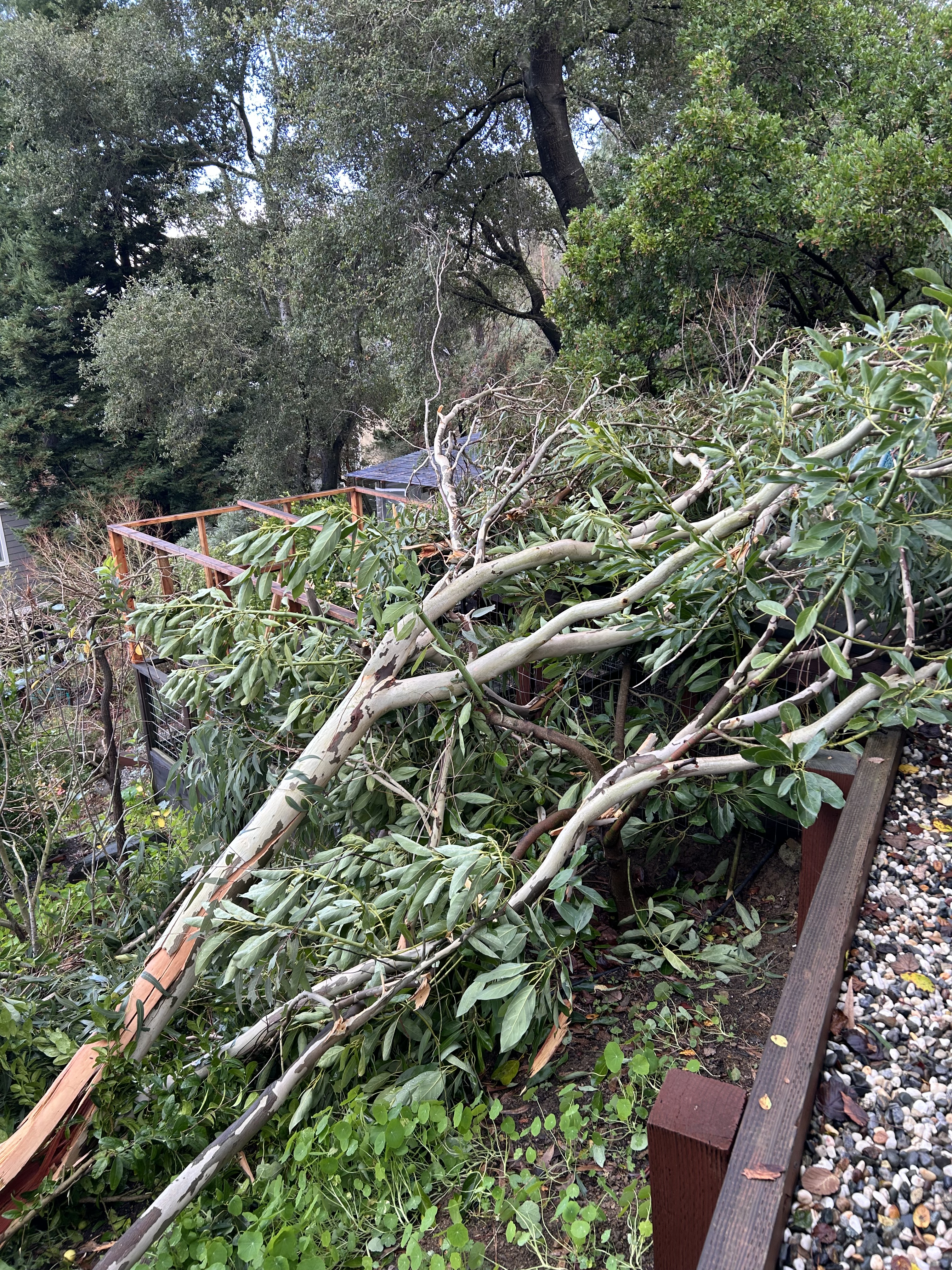
This morning I woke up after a big storm to find several large branches from the neighbors tree having crushed two of my trees and left me with a big mess of damage that will need to be addressed. It will be time consuming and costly. The very human part of me thought, ‘why did this have to happen to me?’ I was angry and disappointed and sad. Then I sat down and read the daily meditation from Preparing for Christmas by Richard Rohr wherein he reminds us that the incarnation of God in Jesus means, “The kingdom is finally to be identified as the Lord Jesus.” His life, his actions, the way he walked, the way he gave and loved and shared, this is the kingdom we are to live in. “If Jesus is Lord, then my house and possessions, family and job are not!”* The tree, the loss, the disappointment do not rule my life. They are real, the sadness is okay, but how I show up to the rest of the day, how I spend my time with the people I am close to, how I work through the necessary process of cleanup, that can all be done differently.
The kingdom of God is not a far off place, it is not something we are waiting for, it is not something that happens to us if we are particularly good, we can not buy or act or pray our way in. The kingdom is a way of loving right where we are, right who we are with. It does not change the circumstances of our lives, it gives us the strength to walk through those circumstances knowing that there is a greater truth as to what is most important for our hearts, our souls. It changes who we are in those circumstances; it changes us in ways we cannot pre-define and ways we cannot control. Sometimes it gives us what we want, sometimes it gives us what we need, sometimes we don’t understand the gift at all. It is as surprising as God coming into the world as a baby in a stable. It is serenity and joy and love and laughter with no expectation and no cause, and maybe not at the right time.

* Preparing for Christmas, Daily Meditations for Advent, Richard Rohr (c)2008 Franciscan Media, pg. 91
Discover more from Faith Works
Subscribe to get the latest posts sent to your email.
 Faith Works